Headlines love the word "disclosure." But what does it actually mean, and is there really a difference between UFO and UAP disclosure? Yes, and understanding it will make you much better at reading UFO news without getting confused by hype.
Confusing the two isn't a huge problem on its own, but it does make it harder to evaluate news coverage accurately. A reader who understands the real difference can spot an overhyped headline in seconds, rather than getting swept up in excitement over a story that, on closer inspection, is far more routine than it first appears.
It's a bit like the difference between a rumor that a company is "hiding something big" and an actual scheduled shareholder report. Both might involve real information eventually becoming public, but only one of them comes with a defined process, a timeline, and an accountable party responsible for delivering it.
What "Disclosure" Actually Means
Disclosure simply means releasing information that was previously secret or classified. It doesn't mean proof of aliens, and it doesn't mean a dramatic announcement. Most disclosure happens quietly, through document releases, congressional hearings, or agency reports made public on a government website.
UFO Disclosure: The Older, Looser Idea
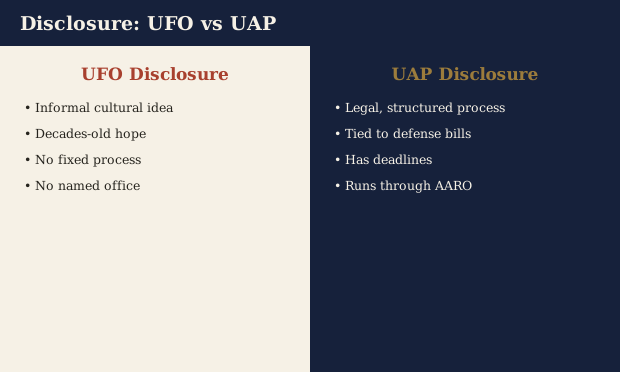
"UFO disclosure" is the term people have used for decades to describe the general hope that governments are hiding proof of alien visitation and will one day reveal it. It's a broad, informal idea tied closely to conspiracy theories and pop culture, going back to claims about Roswell in 1947 and continuing through decades of Freedom of Information Act requests. You can see how these older reports developed over time in our UFO sightings by decade timeline.
UAP Disclosure: The Newer, More Formal Process
"UAP disclosure" refers to something much more specific and current: the actual legal and administrative process by which agencies like AARO and the National Archives review, declassify, and publish real UAP-related records. This process is governed by actual laws, including sections of recent defense funding bills that require agencies to hand over historical UAP records for review.
A Real, Ongoing Process
Unlike the older, vaguer idea of "UFO disclosure," UAP disclosure has concrete deadlines, named offices, and a paper trail you can actually follow. Congress has held hearings specifically requesting release of certain video files, and agencies have published records collections that anyone can search. That's a very different thing from a rumor about a secret alien base.
Why People Mix the Two Up
Because both processes involve government secrecy and both use overlapping language, news coverage often blends them together. A headline might say "New UFO Disclosure!" when it's actually describing a routine UAP records release that doesn't confirm anything sensational at all. Knowing the difference between UFO and UAP disclosure helps you separate real news from hype.
How to Follow Real UAP Disclosure
The most reliable way to track actual UAP disclosure is to follow official sources directly, rather than secondhand headlines. Government offices like AARO and the National Archives publish real records collections. We explain what one of these key offices does in our article on what AARO stands for.
Recent Legislative Efforts
Several proposed laws in recent years have aimed to formalize UAP disclosure further, requiring agencies to review and release historical records within set deadlines. These bills have had a mixed track record, with some provisions passed into law and others stripped out or watered down during negotiations. Regardless of the outcome of any single bill, this legislative activity is a real, checkable part of the UAP disclosure process, very different from vague online rumors about hidden alien evidence.

How to Evaluate a Disclosure Headline
Next time you see a dramatic "disclosure" headline, it helps to ask three quick questions: Does the article name a specific document, hearing, or agency report? Does it link to or quote the actual primary source? And does the claimed content of the release match what the headline promises? A headline promising "shocking new evidence" that actually links to a routine, previously expected records release is a good sign the story is being oversold.
Frequently Asked Questions
Has any government officially confirmed alien technology exists?
No government has issued an official, verified confirmation of extraterrestrial technology as of current public records. Officials have confirmed that certain videos and radar tracks show genuinely unidentified objects, which is a different and much narrower claim.
Why does disclosure take so long?
Reviewing decades of classified records for potential public release is a slow process, involving legal review, national security considerations, and coordination across multiple agencies.
Is disclosure the same thing as an alien announcement?
No, and this is one of the most common misunderstandings. Disclosure refers to releasing records and data. It says nothing, by itself, about what conclusions those records support.
A Quick Summary
UFO disclosure: a decades-old, informal cultural hope that governments will reveal proof of alien visitation. UAP disclosure: a real, ongoing, legally structured process of reviewing and releasing government records. Both use similar language. Only one has an actual paper trail you can follow yourself, complete with named offices, deadlines, and published documents.
A Useful Habit for Reading UAP News
Whenever you come across a headline using the word "disclosure," pause and ask whether it's describing the older, informal cultural idea or the newer, legally defined government process. That single question will save you from a lot of misleading headlines and help you find the genuinely useful stories underneath all the noise.
The Bottom Line on Terminology
Getting comfortable with these two related but distinct ideas, the term and the process, pays off every time a new headline uses the word "disclosure." You'll be able to tell within seconds whether it's describing genuine news or simply repeating an old, familiar hope in fresh packaging.
Related Reading
For the full breakdown of the terms themselves, read our article on the UAP vs UFO difference. To see the actual scale of reports being reviewed, check our page on UFO sighting statistics by year.