Look through almost any list of famous cases, and you'll notice a pattern: UFO sightings near military bases come up again and again. RAF Woodbridge, Area 51, Wright-Patterson Air Force Base, and dozens of others show up repeatedly in UFO history. There are a few very practical reasons why.
This connection between bases and sightings isn't a modern discovery either; it stretches back to the earliest days of UFO history, when new radar technology and jet aircraft first started confusing witnesses who had never seen anything like them before. The pattern has simply continued as military technology has kept advancing ever since.
Understanding these reasons doesn't make every base-area report boring or automatically explained. It just gives you a much better starting point for evaluating any specific case, since you can quickly ask whether it fits one of these known patterns before assuming something more unusual must be going on.
Reason One: That's Where the Advanced Aircraft Are
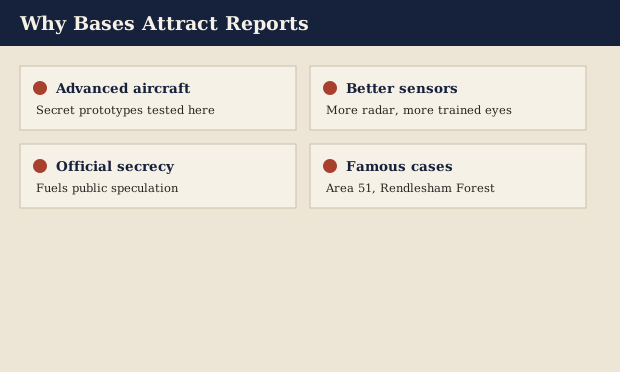
Military bases are, by definition, where new and experimental aircraft get tested. Stealth technology, unusual engine designs, and secret prototypes have all caused genuine public sightings over the decades, later explained once the technology was declassified. The famous stealth bomber, for example, was flying in secret for years before its shape was confirmed publicly, and its unusual silhouette almost certainly explains a share of older sighting reports from bases where it was tested.
Reason Two: More People Are Watching the Sky
Areas around military bases often have more radar coverage, more trained observers, and sometimes more curious civilians who live nearby specifically because of the aviation activity. More eyes and more sensors naturally means more reports, even if the actual rate of genuinely strange events is no higher than anywhere else.
Better Equipment Means Better Reports
Unlike a random sighting reported by someone with just their own eyes, a report from near a military base often comes with radar tracking data attached. That's part of why cases from these areas tend to be taken more seriously by investigators; the evidence is simply more detailed and harder to dismiss outright.
Reason Three: Secrecy Breeds Speculation
Military bases are, again by definition, secretive places. When the public can't get a straight answer about what's happening on a base, speculation naturally fills the gap. Area 51 became one of the most famous names in UFO culture largely because the government refused to officially acknowledge its existence for decades, which only fueled public curiosity rather than reducing it.
A Final Word on Base-Area Reports
If you live near an active military installation and regularly notice unusual air traffic, keeping a simple, dated log of what you observe can be more useful than you might think, especially if a genuine pattern starts to emerge over weeks or months rather than a single isolated night.
Famous Base-Adjacent Cases
The Rendlesham Forest incident near RAF Woodbridge in England, from December 1980, remains one of the most detailed multi-witness military case files in UFO history, involving several U.S. Air Force personnel stationed at the base. Similarly, numerous reports around Area 51 in Nevada trace back to secret aircraft testing that has since been confirmed by declassified government documents.
How This Connects to Modern Investigation
Because military personnel are trained observers with access to proper equipment, their reports carry real weight in official investigations. This is a big part of why agencies like AARO focus heavily on military-sourced reports, which we explain in our article on what AARO stands for.
Area 51's Specific History
Area 51, officially a classified U.S. Air Force facility in Nevada, is probably the single most famous example of this pattern. For decades, the government refused to even confirm the base existed by name, which only deepened public fascination. It was eventually confirmed as a real testing site through declassified documents, and much of the strange aircraft activity reported nearby over the years has since been tied to real, if secret, aircraft programs developed and tested there, including early stealth prototypes.
How Military Bases Typically Respond to Public Reports
When a base receives inquiries about a public sighting nearby, the standard response is usually a brief, general statement confirming or denying unusual activity, without going into specifics about ongoing programs. This isn't necessarily evidence of a cover-up; classified testing programs are, by design, not something a base can discuss publicly, even when the explanation for a sighting is completely mundane from a security standpoint.
Frequently Asked Questions
Are most military base sightings secret aircraft?
A meaningful share are, especially historically, though certainly not all. Weather, wildlife, and civilian aircraft still account for plenty of reports even near active bases.
Can civilians request information about a specific base sighting?
In the United States, Freedom of Information Act requests can sometimes surface additional details, though classified program information is generally exempt from release.
Is it illegal to photograph near a military base?
Rules vary by country and specific base, but many installations do restrict photography near their perimeter for security reasons. It's worth checking local signage and regulations before photographing near any active base.
A Quick Recap
Military bases attract more sightings for practical reasons: advanced testing, better sensor coverage, and a culture of secrecy that fuels public speculation. None of that automatically explains every individual report, but it does explain why this pattern shows up so consistently across decades and across different countries entirely, from Nevada to Suffolk to beyond.
The Bigger Picture Around Bases and Secrecy
Military secrecy and public curiosity have always fed each other. As long as governments need to test new technology away from public view, sightings near military bases are likely to keep generating stories, some with a simple, classified explanation, and a small number that genuinely puzzle even the investigators looking into them.
Related Reading
To see how location-based patterns show up in the numbers, check our page on UFO sighting statistics by year, or read about a regional example in our article on UFO sightings in Newcastle.