For most of UFO history, evidence meant a written statement and maybe a sketch. That changed once cameras became common, and it changed again once the military started releasing its own footage. Looking at UFO sightings caught on camera over the decades tells a story about how evidence itself has evolved.
It's worth remembering that better cameras haven't necessarily made the mystery easier to solve. More footage exists today than ever before, but sorting genuine, unexplainable video from ordinary misidentified objects or outright fakes has become its own specialized skill, one that modern investigators spend a lot of time developing.
Every generation of camera technology has brought its own strengths and its own new problems. Better resolution helps reveal detail, but it also makes digital manipulation easier to attempt and, thankfully, easier for trained analysts to detect. It's a constant back and forth between better evidence and better tools to fake it.
The Early Days: Grainy and Rare
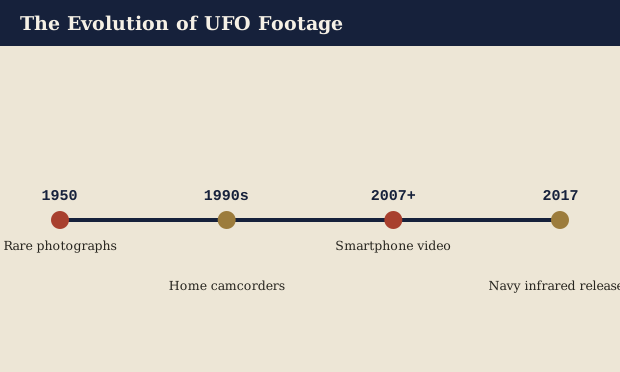
Home cameras existed by the mid-20th century, but they were expensive, slow to develop, and not something most people carried around. A handful of early photographs, like the famous 1950 McMinnville, Oregon photos taken by a farming couple, became famous specifically because clear photographic evidence was so rare at the time. Investigators studied shadows, lighting, and film grain closely, since a single photo carried enormous weight when so little other evidence existed.
The Camcorder Era
Once home video cameras became affordable in the 1980s and 90s, footage of unusual lights became more common, though still often shaky, distant, and hard to analyze properly. The famous 1997 Phoenix Lights event, watched by thousands of witnesses across Arizona, produced numerous home videos that, while dramatic, still left plenty of room for debate about scale and distance.
Smartphones Changed the Volume, Not Always the Quality
Once smartphones put a camera in nearly everyone's pocket, the sheer number of videos exploded. But more footage doesn't automatically mean better footage; heavy digital zoom, shaky hands, and low-light sensor noise still make most smartphone UFO videos hard to fully verify.
The Big Shift: Official Military Footage
The real turning point for UFO sightings caught on camera came when the U.S. Navy officially confirmed that infrared cockpit footage, showing fast-moving unidentified objects, was genuine and not fabricated. Unlike a home video, this footage came paired with radar data, pilot audio, and a documented chain of custody, which is exactly the kind of evidence investigators had been missing for decades. We explain the government office now responsible for reviewing footage like this in our article on what AARO stands for.
Why Some Camera Footage Gets Debunked Quickly
A huge share of viral UFO videos get explained within days once other researchers examine the metadata, compare the footage to known flight paths, or spot common camera artifacts like lens flares and sensor smudges. We cover this process closely in our article on UFO sightings that were later explained.
What Makes Footage Genuinely Hard to Explain
The hardest cases to dismiss are ones with multiple, independent camera angles, radar confirmation, and trained observers all agreeing on what they saw. That combination is rare, which is exactly why it gets so much attention when it happens.
How Investigators Actually Analyze Footage
Analyzing a video is a lot more technical than just watching it. Investigators look at metadata, hidden information saved inside a video file that can reveal the original recording time, device, and sometimes even GPS location. They also study the footage frame by frame, checking for consistent lighting, shadow direction, and any editing artifacts that might reveal digital manipulation. Comparing camera focal length and known object distance can also help estimate real size and speed, which is often where dramatic-looking footage falls apart under closer examination.
Why Some Footage Never Gets Fully Resolved
Even good footage sometimes stays unresolved simply because there isn't enough supporting data. A single video, without radar confirmation, other witnesses, or reliable distance information, can be genuinely impossible to conclusively identify, even when investigators are confident it isn't fake. This is different from a case being "proven mysterious"; it usually just means the evidence available isn't strong enough to reach a firm conclusion either way.

Frequently Asked Questions
Can I tell if a UFO video is fake just by watching it?
Not reliably. Modern editing tools can create convincing fakes, which is exactly why investigators rely on metadata and cross-referenced data rather than visual impression alone.
Why did the Navy release its cockpit footage?
The footage was leaked publicly before the Navy officially confirmed its authenticity, after which officials decided formal confirmation was better than letting an unverified leaked copy circulate without context.
What camera equipment do investigators trust the most?
Fixed military sensor systems, which record calibrated infrared and radar data simultaneously, are generally trusted far more than handheld consumer video, since they produce measurable, cross-checkable data rather than just a visual impression.
A Quick Recap
From rare 1950s photographs to leaked military infrared video, the story of UFO camera evidence is really a story about improving trust, not just improving picture quality. Radar confirmation, sensor logs, and a clear chain of custody now matter just as much as the footage itself.
Where Camera Evidence Goes From Here
As sensor technology keeps improving, and as more of it ends up in ordinary people's pockets and on more aircraft, the overall quality of UFO sightings caught on camera is likely to keep rising. That's good news for anyone who wants this topic taken seriously: better evidence generally leads to more confident conclusions, one way or the other.
Related Reading
To see how many camera-based reports come in each year, visit our page on UFO sighting statistics by year, or learn how to properly capture and submit your own footage in our guide on how to report a UFO sighting.